As an Amazon Associate this site earns from qualifying purchases.
Specifications at a glance
| Model | Price | Controls | Water heating | Seat heat levels | Dryer | Notable extra |
|---|---|---|---|---|---|---|
| SmartBidet SB-1000 | Check price on Amazon | Remote control | 3 water temperatures | 5 levels | 5 warm air settings | Supports up to 330 lbs; skin sensor; quick-release |
| SmartBidet SB-2000 | Check price on Amazon | Side control panel (no batteries) | 3 temperature settings | 3 levels | 5-level dryer | 5 pressure levels, 5 nozzle positions, oscillating wash |
| Rainsworth Smart Bidet Seat | Check price on Amazon | Remote + knob | Instant heating | 4 levels | 4 levels | Dual-user memory; external stainless filter |
| KERDE P30B | Check price on Amazon | Side panel + wireless remote | Adjustable (levels not stated) | Multiple levels | Warm air dryer | LED night light |
| KEETO Smart Bidet Toilet Seat | Check price on Amazon | Wireless remote + side knob | Instant warm water | Adjustable | Multiple temperature settings | Auto-lowers seat temp after 10 min; IPX4 |
| iliD Heated Bidet Toilet Seat | Check price on Amazon | Side knob + wireless remote | Instant, endless warm water | Not stated | 3-level | Auto open/close lid; 19.9 x 14.75 x 3.65 in, 9 lbs |
Quick answer: A smart bidet toilet seat replaces your existing toilet seat with an electric one that sprays warm water to clean you, then dries you with warm air — controlled by a remote or a side panel. It plugs into a nearby GFCI outlet and tees off your toilet's existing water supply line, so most people can install one in well under an hour without a plumber. "Smart" here mostly means electronic and heated: warm water on demand, a heated seat, adjustable pressure and nozzle position, and sensors that stop it spraying when nobody's sitting down.
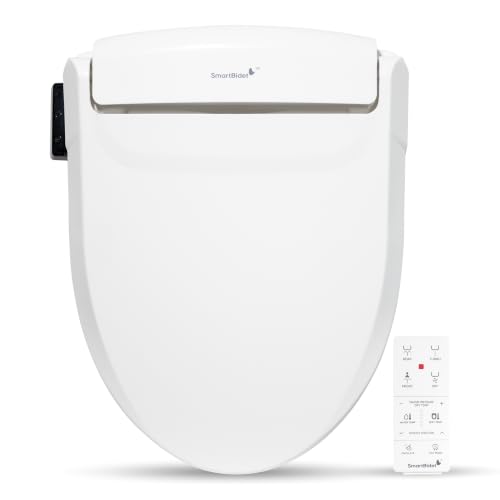
- SMART & EASY: Upgrade now to a hands-free wash with our Smart Bidet toilet seat. Our Smart Bidet includes a remote that ends awkward twisting by using a simple, easy-to-use design
- Quick Warm Comfort: Enjoy soothing, rapid warm water delivery from this advanced electric bidet. Engineered as a fully customizable heated bidet, it features 3 adjustable water
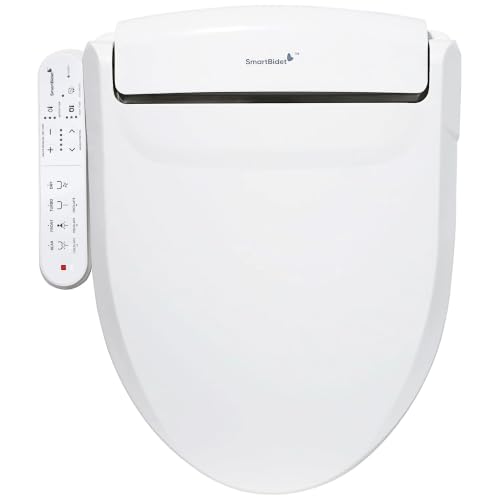
- PERSONALIZED WARM-WATER CLEANING: The SB-2000 offers posterior, feminine, turbo and oscillating wash modes. Five water-pressure levels, three water-temperature settings and five
- HEATED SEAT AND WARM AIR DRYER: Three heated toilet seat temperature levels provide year-round comfort. The five-level warm air dryer helps reduce toilet-paper use after each wash
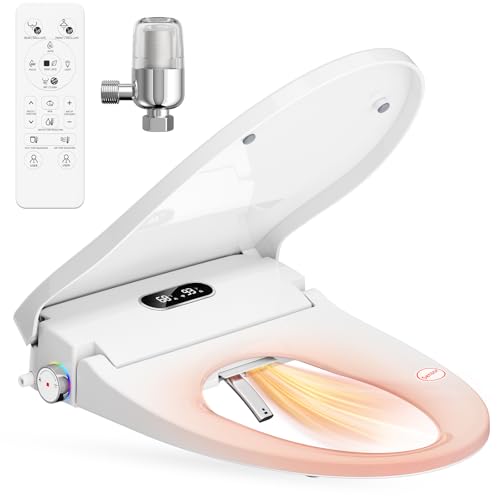
- Dual User Memory: Saves custom settings (seat heat, water temp, nozzle, pressure, dryer) for two users. One-touch remote recall ensures instant personalized comfort for every
- Seamless Auto-Dry Cycle: Select wash mode via knob or remote to automatically activates warm air drying after cleaning. This hands-free, approx. 4.5-minute sequence delivers a
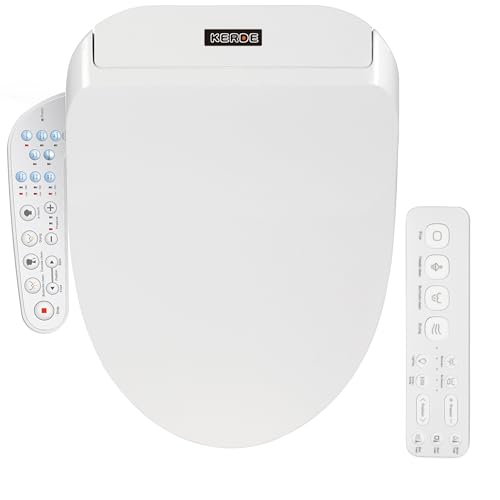
- 𝐃𝐮𝐚𝐥 𝐂𝐨𝐧𝐭𝐫𝐨𝐥: 𝐒𝐢𝐝𝐞 𝐏𝐚𝐧𝐞𝐥 & 𝐖𝐢𝐫𝐞𝐥𝐞𝐬𝐬 𝐑𝐞𝐦𝐨𝐭𝐞:The KERDE P30B offers dual control options for ultimate convenience. Use the full-function side panel
- 𝐖𝐚𝐫𝐦 𝐖𝐚𝐭𝐞𝐫 𝐖𝐚𝐬𝐡 𝐰𝐢𝐭𝐡 𝐀𝐝𝐣𝐮𝐬𝐭𝐚𝐛𝐥𝐞 𝐒𝐞𝐭𝐭𝐢𝐧𝐠𝐬:Experience a refreshing clean with warm water wash that offers adjustable temperature and pressure
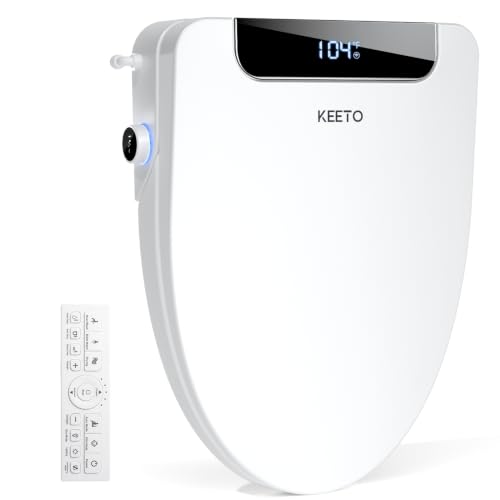
- Instant Warm Water Wash: Tankless heating system delivers warm water instantly — no cold-water surprises like tank-based bidets. Choose from rear wash, feminine wash, kids mode
- Heated Seat & Warm Air Dryer: Stay comfortable year-round with an adjustable heated seat, warm air dryer, and multiple temperature settings. For added safety, seat temperature
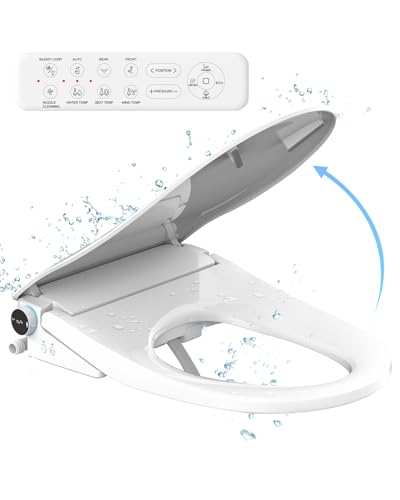
- Auto Open/Close: With the integration of advanced radar and body-sensing chip technology, this intelligent bidet seat offers a seamless automated experience. The lid opens
- Revolutionary Comfort & Sleek Design: Boasting a patented appearance and innovative design, this bidet seat features a 32% slimmer profile and a 20% larger seat area, greatly
What makes it "smart" instead of just a bidet
A non-electric bidet attachment is a plastic bar that clamps under your seat and sprays cold tap water at one pressure. That's it. A smart bidet toilet seat is the whole seat, wired to power, and that power buys you four things:
- Warm water, either from a small heated tank or an instant heater that never runs out mid-wash.
- A heated seat — the feature people who were skeptical end up talking about most, especially in winter.
- A warm air dryer, which is what actually cuts toilet paper use.
- Electronics: seat sensors, self-cleaning nozzles, memory settings, night lights, eco modes.
Every seat listed here is built for elongated bowls. Measure yours before you order — this is the single most common ordering mistake.
Finding the right what is a smart bidet toilet seat comes down to matching the features to how you will actually use it.
A closer look at one of them
The SmartBidet SB-1000 Smart Bidet Electric Bidet Toilet Seat with Heated Seat, Warm Water, Air Dryer – Remote Control, Elongated is a useful reference point for what a mid-priced electric seat includes. It runs a 3-in-1 self-cleaning nozzle with posterior, feminine and turbo wash modes, offers 3 water temperatures and 5 seat warming levels, and dries with 5 adjustable warm air settings. It's rated to support up to 330 lbs, uses skin-sensor activation so it won't fire when unoccupied, and has a soft-close lid plus a quick-release mount for cleaning underneath. The listing states installation takes under 30 minutes with no special plumbing, and an automatic energy-saving mode reduces power draw when idle. Controls are remote-only — worth noting if you'd rather have a panel you can reach without hunting for a remote.
Who a smart bidet toilet seat is for
- Anyone in a cold house. The heated seat is not a gimmick. If your bathroom is unheated in winter, this changes how the room feels.
- People with mobility or reach limitations. A wash-then-dry cycle that runs hands-free — like the roughly 4.5-minute auto-dry sequence the Rainsworth advertises — removes a lot of awkward maneuvering.
- Households wanting to cut paper spending. A warm air dryer is the feature that actually does this. Bidet attachments without dryers don't.
- Multi-person households. Dual-user memory, as on the Rainsworth, means two people don't fight over pressure and temperature settings.
- Renters, surprisingly. These bolt on and off with the existing seat hardware. You take it with you.
Who should skip it
- Anyone without a GFCI outlet within reach of the toilet. These need 120V power. The SB-2000 listing explicitly calls for a 120V GFCI outlet. Adding one means an electrician, which can cost more than the seat.
- Round-bowl toilets. Everything here is elongated-only.
- Wall-hung, skirted, or unusually shaped toilets. Mounting geometry varies and these seats assume a conventional two-piece or one-piece bowl.
- Anyone who just wants a rinse. If warm water, heated seat and drying don't appeal, a $40 non-electric attachment does the core job.
- People who hate a cord. There will be a power cable running from the seat to the wall. It's visible.
The honest trade-offs
Instant vs. tank heating. Instant-heating models (Rainsworth, KEETO, iliD) don't run out of warm water. Tank-style systems can cool during a long wash. Instant heaters generally draw more power when running.
Remote vs. side panel. Remotes are cleaner-looking and avoid twisting, which the SB-1000 is built around. But remotes need batteries and get lost. The SB-2000 goes the other way — side panel, no remote, no batteries. The KERDE P30B and KEETO include both.
Automation adds failure points. The iliD's auto open/close lid uses radar and body-sensing, and its listing specifically warns not to lift or close the lid by hand. That's a real constraint if guests use your bathroom.
Cleaning. Self-cleaning nozzles rinse themselves, but the seat itself is a bigger object with more crevices than a plain plastic seat. Quick-release mounts (SB-1000, SB-2000) and detachable nozzles (KEETO) exist because this matters.
Water quality. If you're on well water or older pipes, sediment is a genuine concern for small nozzles. The Rainsworth's external stainless steel mesh filter addresses that directly; not every model lists one.
What to check on the listing before you buy
Listings change, and so do prices — treat the figures above as a starting point, not a quote.
- Confirm the current price and the exact variant. Many of these are sold in multiple configurations. Make sure the one in your cart is the elongated version with the control style you want.
- Measure your bowl. Length from the mounting bolts to the front lip, and width at the widest point. The iliD lists dimensions of 19.9 x 14.75 x 3.65 inches; compare against yours.
- Verify your outlet. Distance from the toilet to the nearest grounded GFCI outlet, and whether you need an extension solution.
- Read the warranty terms on the listing itself, not a third-party summary.
- Check what's included — T-valve, hose, mounting plate. The iliD listing mentions its support team will send a 3/8" T-valve replacement if the included one doesn't fit.
- Read recent buyer reviews yourself, filtered to the most recent months and to your specific variant. That's where installation quirks show up.
Rainsworth Smart Bidet Seat with Remote Control for Elongated Toilets — consider instead if…
…more than one person will use it daily and you're tired of resetting everything. The Rainsworth Smart Bidet Seat with Remote Control for Elongated Toilets stores seat heat, water temperature, nozzle position, pressure and dryer settings for two users, recalled with one remote button. It uses instant heating, stainless steel self-cleaning nozzles, and an external stainless mesh filter for rust and sediment — the most water-quality-conscious spec sheet in this group, at $161.40.
KERDE P30B — consider instead if…
…budget is the deciding factor and you want both control methods. At $149.99, the KERDE P30B Bidet Toilet Seat - Dual Control (Side Panel & Remote), Warm Water Wash, Heated Seat, Warm Air Dryer, LED Night Light,Existing Toilets Electric Bidet Elongated Electronic Heated Smart includes a full-function side panel and a wireless remote, warm water wash with adjustable temperature and pressure, a self-cleaning stainless nozzle, multi-level heated seat, warm air dryer, energy-saving mode, quiet-close lid, and an LED night light.
Smart Bidet Toilet Seat Elongated, KEETO — consider instead if…
…you sit for a while and worry about a seat that stays hot. The Smart Bidet Toilet Seat Elongated, KEETO Electric Heated Seat with Instant Warm Water, Warm Air Dryer, Front & Rear Wash, Oscillating Nozzle, Wireless Remote, Night Light, Soft Close Lid automatically drops seat temperature to Level 1 after 10 minutes to reduce low-temperature burn risk. It adds a kids mode, oscillating wash, LED display, detachable nozzle, IPX4 water resistance and a scannable install video, at $159.99.
SmartBidet SB-2000 — consider instead if…
…you'd rather never deal with a remote. The SmartBidet SB-2000 Smart Bidet Electric Bidet Toilet Seat with Heated Seat, Warm Water, Air Dryer – Side Control Panel, Elongated puts wash, dry, pressure, temperature and nozzle controls on an attached side panel — no remote, no batteries. It offers posterior, feminine, turbo and oscillating washes, 5 pressure levels, 3 water temperatures, 5 nozzle positions and a 5-level dryer for $289.99.
iliD Heated Bidet Toilet Seat With Remote, Auto Open Lid, Elongated — consider instead if…
…you want the hands-free-from-the-doorway experience. The iliD Heated Bidet Toilet Seat With Remote, Auto Open Lid, Elongated uses radar and body-sensing to open the lid as you approach and close it as you leave. It's a 32% slimmer profile with a 20% larger seat area, instant endless warm water, 3-level warm air drying, and a stated 3-minute installation, at $242.99.
FAQ
Do I need a plumber? Usually not. These tee into the existing toilet supply line with an included T-valve and bolt on where your old seat was. The SB-1000 listing states under 30 minutes with no special plumbing; the iliD claims a 3-minute install. Electricity is the real gate — you need a 120V GFCI outlet nearby.
Will it fit my toilet? Only if your bowl is elongated. Every seat covered here specifies elongated toilets. Measure before ordering rather than trusting a guess.
Does the warm water ever run out? Depends on the heating method. Models advertising instant heating — Rainsworth, KEETO and iliD — heat on demand rather than holding a reservoir.
Is it safe to leave the seat heater on all day? Most of these include energy-saving modes that reduce power when idle, and skin or seat sensors that only activate wash and dry functions when someone is seated. The KEETO additionally steps seat temperature down after 10 minutes of continuous use.
Related guides
- Editorial Policy: How Lustreau Researches and Reviews Products
- Best bathroom fixtures and vanities - bathroom vanities, bidets, vanity tables and makeup vanities for Small Business Owners
- Comparing Your Best bathroom fixtures and vanities - bathroom vanities, bidets, vanity tables and makeup vanities Options
Key Takeaways
- Choosing the right what is a smart bidet toilet seat means matching the key features to your specific needs and budget
- Read real customer reviews and check the return policy before you commit
- Compare value across models — the priciest option is not always the best fit