As an Amazon Associate this site earns from qualifying purchases.
Material and spec reference
Only what the manufacturers state:
| Product | Counter/Basin Material | Size | Notable Cleaning Feature | Price |
|---|---|---|---|---|
| PONLTTEY Modern Bathroom Vanity Set (48") | Quartz top with ceramic sink | 48" | Seamless quartz top; complete set with faucet and drain kit included | Check price on Amazon |
| LUXOAK 24" Small Farmhouse Vanity | Solid surface sink | 23.43"W x 18.31"D x 33.7"H | Integrated basin reduces exposed seams around the sink | Check price on Amazon |
| 30" Maple Shaker Bathroom Vanity Base | Not stated (base only, no top or sink) | 30" | Not stated | Check price on Amazon |
| Lysol Power Foaming Bathroom Cleaner | N/A (cleaner) | 32 oz | Rated for glazed porcelain, glazed ceramic, stainless, laminated plastic | See the product list on this page |
| KARAMAG 22 Inch Undermount Bathroom Sink | Glazed vitreous china | External 21.8"x14.0"x6.9"; internal 19.7"x11.6"x5.3" | Smooth surface does not absorb residue | Check price on Amazon |
| CITTANEO 30 Inch Matte Black Vanity Sink | Engineered quartz, solid surface | 30" | Non-porous integrated basin; overflow included | Check price on Amazon |
Quick answer: Wipe the countertop and sink daily with a soft damp cloth, and dry the area where the counter meets the backsplash — standing water at that seam is what kills vanities. Deep clean weekly with a pH-neutral cleaner on the cabinet and a bathroom-specific spray on the sink and stone, and reseal or re-caulk once a year. Almost every "ruined" vanity is really a swelled particleboard door, a blown seam, or a stripped finish from an abrasive cleaner.

- Complete Vanity Set Ready to Install: Includes vanity cabinet, countertop with basin(s), mirror (or mirrored cabinet), faucet, drain kit, and angle valves. Everything arrives
- Fully Customizable to Your Space: Need a specific size, color, or sink configuration (single or double)? We offer custom solutions! Contact us to discuss your unique requirements
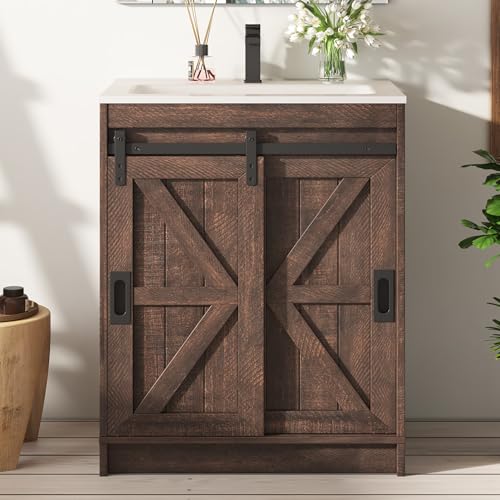
- 【Farmhouse Vanity for Small Spaces】 Bring warm farmhouse style and practical storage to compact bathrooms with this 24 inch bathroom vanity. The distressed brown wood grain
- 【Sliding Barn Doors Save Front Space】 Unlike traditional swing-out cabinet doors, the double-direction sliding barn doors glide left and right along black metal rails for easy
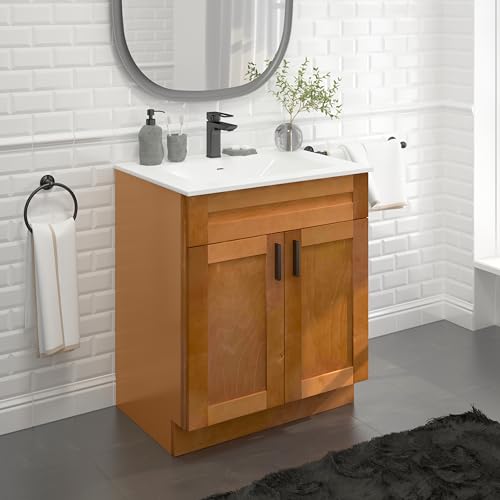
- VANITY BASE ONLY – READY TO ASSEMBLE – This 30-inch bathroom vanity cabinet is sold without a sink top, sink, faucet, or drain, giving you the flexibility to create a custom
- SPACIOUS DOUBLE-DOOR STORAGE – Features a roomy two-door cabinet interior for storing toiletries, cleaning supplies, towels, and everyday bathroom essentials while helping keep
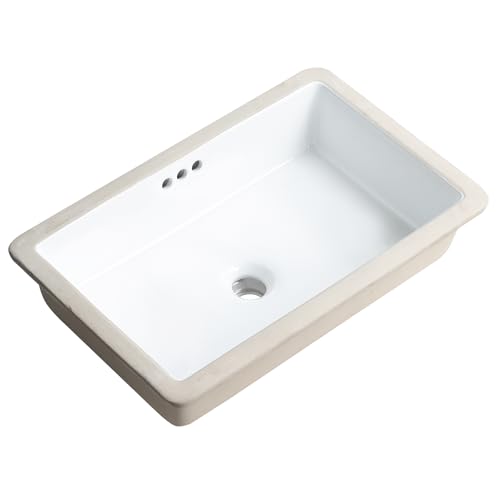
- White Undermount Bathroom Sink: This rectangle undermount bathroom sink with vertical sides is designed for bathroom, vanity, lavatory, restroom. No faucet holes
- Dimension: 22 Inch (21.8"x14.0") under counter bathroom sink. (External: 21.8x14.0x6.9 Inch; Internal: 19.7x11.6x5.3 Inch) US standard 1.75”drain opening, please notice that
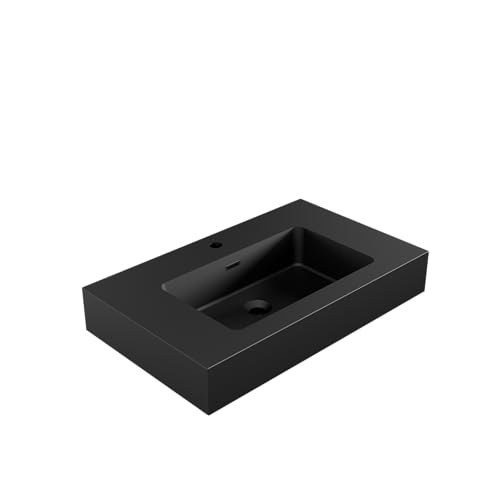
- Modern Matte Black Design: Elevate your bathroom with this sleek and contemporary matte black sink. Its modern design adds a touch of sophistication, making it a perfect fit for
- Premium Engineered Quartz Construction: Crafted from high-quality engineered quartz, this sink is built to last. Its durable material ensures resistance to scratches, stains, and
The order to clean in, and the gotcha at each step
Working top-down and dry-last saves you from redoing steps.
Finding the right how to clean and maintain a bathroom vanity comes down to matching the features to how you will actually use it.
1. Clear the counter completely. Everything comes off — toothbrush cups, soap dishes, hair tools. Gotcha: metal-bottomed toothbrush cups and shaving cans leave rust rings that etch into stone if left sitting. Once they've stained, they're a polish job, not a wipe job.
2. Dry-dust the cabinet doors and toe kick first. A dry microfiber cloth pulls off hair and lint before you introduce water. Gotcha: if you spray first, hair turns into a smeared paste that gets pushed into door seams and hardware gaps.
3. Clean the sink basin and countertop. A foaming bathroom cleaner is the right tool here for glazed ceramic, porcelain, and stainless fixtures. Lysol Power Foaming Bathroom Cleaner is formulated for exactly these surfaces — the label lists glazed porcelain, glazed ceramic tile, stainless steel fixtures, and laminated plastic, and the foam is designed to break down soap scum without scrubbing. Gotcha: "no scrubbing" only works if you let it dwell. Spray, walk away, come back — don't spray and immediately wipe.
4. Check what your countertop actually is before you spray it. Natural stone (marble, granite, travertine) and anything acid-sensitive needs a pH-neutral stone cleaner instead of a general bathroom spray. Engineered quartz and solid surface are far more forgiving. Gotcha: if you can't identify the material, drip a little water on an inconspicuous spot — if it darkens and soaks in within a minute, you're on porous stone and you need sealer, not spray.
5. Wipe the cabinet with a barely-damp cloth, then dry it immediately. Wood, thermofoil, and painted MDF all get cleaned the same way: damp, not wet, and dried within seconds. Gotcha: the bottom edge of a door and the underside of the toe kick are unfinished on most vanities. Water wicks straight into the core there and the swelling is permanent.
6. Do the hardware. Knobs, pulls, sliding barn-door rails, and hinges hold more grime than the doors do. Damp cloth, then dry. Gotcha: cleaner that pools behind a knob backplate will pit the finish over weeks. Dry behind the hardware, not just on it.
7. Open the cabinet and look underneath the sink. Every clean is a free plumbing inspection. Run your hand along the P-trap, the supply lines, and the underside of the sink rim. Gotcha: a slow supply-line drip evaporates between checks and leaves only a faint chalky ring — that ring is the warning, not the water.
8. Dry the counter-to-backsplash seam and the sink rim last. This is the single highest-value 15 seconds in the whole routine.
Once a month
- Clear out the cabinet, vacuum the interior, wipe the deck.
- Tighten hinge screws and any handle that has gone loose.
- Check the caulk line at the backsplash for gaps or dark spots.
Once a year
- Reseal natural stone tops (a water-drop test tells you if it's due).
- Cut out and replace any caulk that's discolored, peeling, or split.
- Touch up chipped paint or exposed wood edges with matching sealer.
What goes wrong, and how you fix it
Swelled, bubbling cabinet door bottoms. Symptom: the lower inch of a door feels spongy or the laminate has lifted. Cause: water sitting on the floor or wicking off a wet towel into the unfinished bottom edge. Fix: the swelling is not reversible — dry it out, seal the edge, and stop the water source. Replacing the door (or the whole base) is the only cosmetic fix.
Cloudy, dull patches on a stone countertop. Symptom: a hazy ring where a bottle of toilet cleaner, mouthwash, or perfume sat. Cause: acid etching, which is physical damage to the stone, not a stain. Fix: a marble polishing powder for light etching; a stone pro for deep ones. Prevention is a tray under anything acidic.
Black mildew along the caulk line. Symptom: a dark stripe where counter meets wall that won't wipe off. Cause: the caulk has failed and water is sitting behind it. Fix: cleaner won't reach mildew growing behind the bead. Cut the old caulk out, dry the gap thoroughly for a day, and re-lay fresh 100% silicone.
Faucet base leaving a permanent water ring. Symptom: a chalky crust at the faucet's footprint. Cause: limescale from hard water plus never drying that spot. Fix: white vinegar on a cloth wrapped around the base for 15 minutes — but never on natural stone, where vinegar etches. On stone, use a limescale remover rated for it.
A wobbly, stripped drawer or barn-door rail. Symptom: screws spin without biting. Cause: repeated tightening into humid, softened particleboard. Fix: glue a wooden toothpick or dowel into the hole, let it cure, redrive the screw.
Sink drain smells even after cleaning. Symptom: odor returns within hours. Cause: biofilm in the overflow channel, which no cleaner reaches from the drain side. Fix: pour cleaner directly into the overflow hole and flush it.
Drain and faucet are not included with the KARAMAG or CITTANEO tops.
When the fix is a new one
Sometimes the maintenance math stops working — a swelled base, a cracked cultured-marble top, a seam that keeps growing mildew no matter how often you re-caulk. Check current specs and buyer reviews yourself before committing to any of these.
PONLTTEY Modern Bathroom Vanity Set — removes the parts-sourcing problem
This 48" set arrives with the cabinet, quartz countertop with basin, mirror, faucet, drain kit, and angle valves in one box, and ships pre-assembled. For maintenance, a seamless quartz top means fewer joints to trap water, and having the faucet and drain matched from the factory avoids the mismatched-fitting leaks that plague piecemeal builds. See the PONLTTEY Modern Bathroom Vanity Set - 48" Solid Wood Cabinet with Seamless Quartz Top & Ceramic Sink, Anti-Fog LED Mirror (3-Color Lights, Magnifying Mirror) Waterproof Storage listing for current details.
LUXOAK 24" Small Farmhouse Vanity with Barn Door Storage Cabinet — fewer seams, sliding doors
If you're searching specifically for farmhouse-vanity upkeep, the design choices here matter. The integrated white solid surface sink reduces exposed seams around the basin, which is where soap residue and water spots collect on a two-piece top. The sliding barn doors run on black metal rails rather than swinging out, and the U-shaped interior shelf is shaped around under-sink plumbing. Details on the LUXOAK 24" Small Farmhouse Vanity with Barn Door Storage Cabinet page.
30" Maple Shaker Bathroom Vanity Base — keep the top, replace the rotted cabinet
When the countertop is fine but the cabinet is water-damaged, a base-only cabinet is the cheaper repair. This one is ready-to-assemble, sold without top, sink, faucet, or drain, with a two-door interior and a maple shaker face. Full specs on the 30" Maple Shaker Bathroom Vanity Base – Ready-to-Assemble Sink Cabinet, Freestanding Bathroom Vanity Base Only, No Top or Sink listing.
Lysol Power Foaming Bathroom Cleaner — the weekly deep-clean step
A foaming spray that targets soap scum, limescale, mold, mildew, and grime, and is tested to kill 99.9% of bathroom bacteria and viruses when used as directed. It sanitizes in 30 seconds on washable, hard, non-porous surfaces. Check the surface list on the Lysol Power Foaming Bathroom Cleaner, Multipurpose Cleaner for Showers, Bathtubs, Sinks, Disinfectant Spray Kills 99.9% of Germs, Zero Bleach Cleaning Spray, 32 Oz. page before using it on your countertop.
KARAMAG 22 Inch Undermount Bathroom Sink — a basin that doesn't hold residue
Glazed vitreous china with a smooth surface the manufacturer states does not absorb residue, in a rectangle undermount format with overflow and a US-standard 1.75" drain opening. No faucet holes; drain and faucet are sold separately. Dimensions and fit notes are on the KARAMAG 22 Inch Undermount Bathroom Sink White Rectangle Sink with Overflow listing.
CITTANEO 30 Inch Matte Black Vanity Sink — non-porous top, one continuous surface
Engineered quartz in a solid surface top with an integrated basin, so the countertop flows into the bowl with no rim seam to scrub. The manufacturer describes it as resistant to scratches and stains with an easy-to-clean smooth surface, and it includes an overflow. Drain and faucet are not included. Details on the 30 Inch Matte Black Vanity Sink – Solid Surface Bathroom Vanity Top with Integrated Sink, Easy-to-Clean Non-Porous Finish for Powder Room or Guest Bath page.
FAQ
Can I use a magic-eraser sponge on my vanity top? On glazed ceramic and porcelain, sparingly. On painted cabinet doors, polished stone, or matte finishes — no. Melamine foam is a fine abrasive, and it will dull a sheen permanently in the exact spot you scrubbed hardest.
How do I clean a farmhouse vanity without damaging the distressed finish? Damp cloth, dry immediately, never a spray applied directly to the wood. Distressed finishes have deliberately thin spots where the sealer is minimal, and repeated wet cleaning strips them into blotches. Spray the cloth, not the cabinet.
What maintenance actually keeps a vanity looking new? Three habits: dry the counter after the last use each night, keep a tray under anything acidic or metal-bottomed, and re-caulk the backsplash before it discolors instead of after. Everything else is optional.
How often should natural stone be resealed? Test rather than guess. Drip water on the counter and wait five minutes — if it beads, you're sealed; if the stone darkens, reseal. Most bathroom counters need it every 12 to 18 months.
Related guides
- Current Rates for Best bathroom fixtures and vanities - bathroom vanities, bidets, vanity tables and makeup vanities
- Best Providers for Best bathroom fixtures and vanities - bathroom vanities, bidets, vanity tables and makeup vanities
- Get a Best bathroom fixtures and vanities - bathroom vanities, bidets, vanity tables and makeup vanities Quote
Key Takeaways
- Choosing the right how to clean and maintain a bathroom vanity means matching the key features to your specific needs and budget
- Read real customer reviews and check the return policy before you commit
- Compare value across models — the priciest option is not always the best fit